
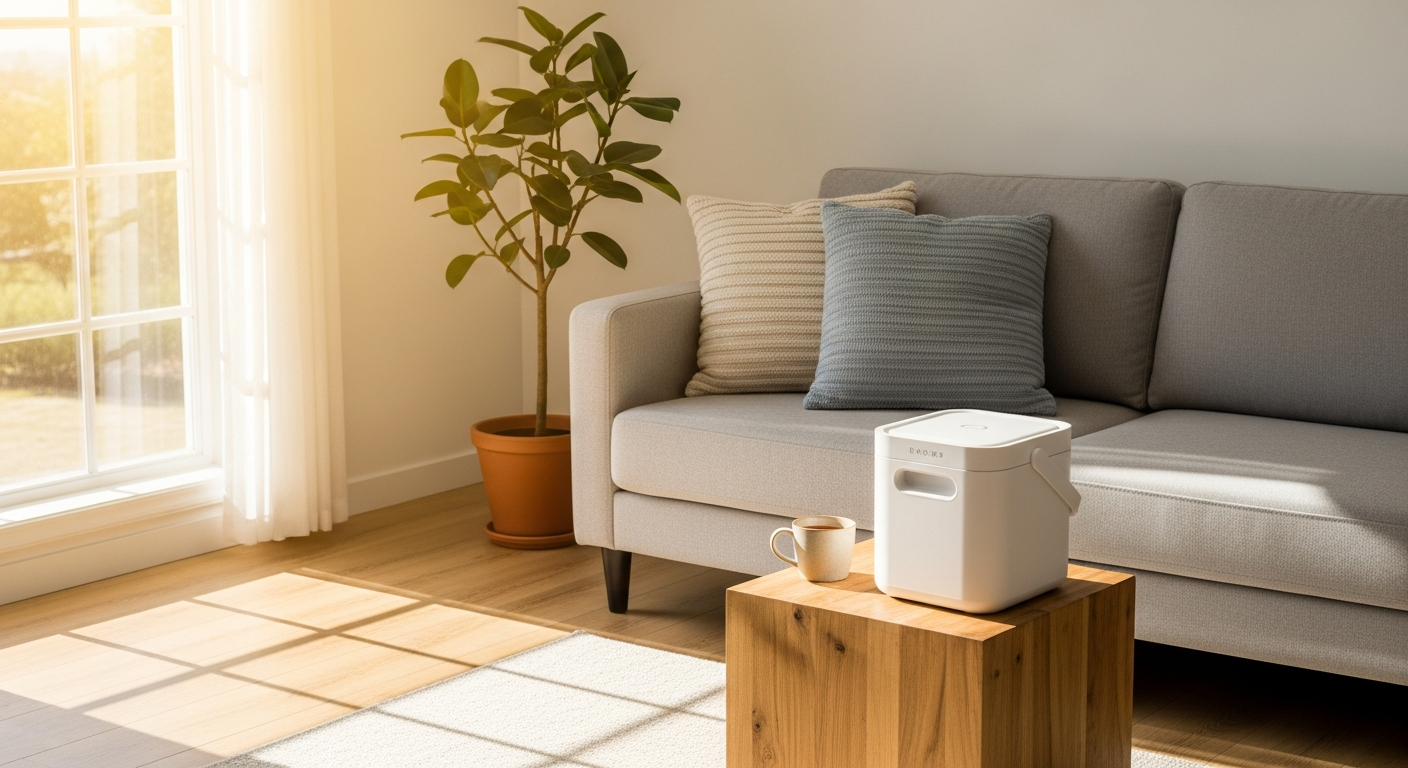
Cooling gadgets are everywhere right now, and a lot of the marketing is nonsense — no, a desk-sized gadget cannot air-condition your house. Here's the honest breakdown of what each type actually does, so you buy the right one for your space instead of the most-hyped one.
Understanding Your Cooling Options
When summer temperatures rise, finding an effective way to cool your living space becomes a priority. However, the market is flooded with various types of cooling devices, each with its own technology, benefits, and limitations. Understanding the fundamental differences between evaporative coolers, traditional fans, and portable air conditioners is essential to making an informed purchase that will actually meet your needs.
How Evaporative Coolers Actually Work
Evaporative coolers (often marketed as "swamp coolers" or personal coolers) operate on a simple natural principle: as water evaporates, it absorbs heat from the surrounding environment. These devices typically contain a water tank and a cooling pad or filter. A fan pulls warm ambient air through the water-soaked pad. The heat in the air causes the water to evaporate, and the resulting cooler, slightly humidified air is blown out into the room.
This technology is incredibly energy-efficient because it only requires electricity to run a small fan and occasionally a tiny water pump. There are no heavy, power-hungry compressors involved. However, because they add moisture to the air, evaporative coolers perform best in dry, arid climates. In highly humid environments, the air cannot absorb much more water, significantly reducing the cooling effect.
Portable Air Conditioners vs. Evaporative Coolers
True portable air conditioners use the same compressor-based refrigeration cycle as a refrigerator or a window AC unit. They pull in warm air, pass it over coils chilled by a chemical refrigerant, and blow the significantly colder air back into the room. Crucially, they also extract heat and moisture from the air and exhaust it outside, which is why all true air conditioners must be vented out a window or door.
If a device does not have an exhaust hose to route hot air outside, it is not an air conditioner. It is either a fan or an evaporative cooler.
Honest Limitations: What a Personal Cooler Cannot Do
It is vital to set realistic expectations. A small personal evaporative cooler will not cool an entire room or house. These devices are designed for directional, personal cooling. They lower the temperature of the air in a localized area—typically within a few feet of the unit. They are excellent for placing on a desk while you work, on a bedside table while you sleep, or next to an armchair. They are not a replacement for central air conditioning or a high-BTU window unit. If you need to drop the ambient temperature of a 300-square-foot living room by 10 degrees, you need a compressor-based air conditioner.
Key Features to Consider
1. Room Coverage and Sizing
Before purchasing, evaluate the size of the space you intend to cool. Personal evaporative coolers have an effective range of about 2 to 4 feet. Larger tower fans can circulate air across a standard living room but do not lower the temperature. Portable AC units are rated in BTUs (British Thermal Units); a higher BTU rating means it can cool a larger room, but it will also be larger, heavier, and louder.
2. Noise Levels
Because cooling devices are often used in bedrooms or home offices, operating volume is a critical factor. Personal coolers and desk fans are generally very quiet, often operating between 30 and 45 decibels (similar to a quiet library). Compressor-based portable ACs are significantly louder, typically ranging from 55 to 65 decibels, which can be disruptive to light sleepers or during phone calls.
3. Power Consumption
If you are concerned about your electricity bill, evaporative coolers and fans are the clear winners. A typical personal cooler uses between 5 and 15 watts of power—similar to a single LED lightbulb. In contrast, a portable air conditioner can draw anywhere from 800 to 1,500 watts, which will noticeably increase your monthly energy costs if used frequently.
4. Water Tank Capacity (For Evaporative Units)
If you opt for an evaporative cooler, check the size of the water tank. A larger tank means fewer refills. Small desktop units might need to be refilled every 4 to 6 hours, while slightly larger models can last 8 to 12 hours, allowing them to run through the night without interruption. Some models also include an ice tray or allow you to use ice water for an extra chill.
5. Portability and Setup
Personal coolers are lightweight (often under 3 lbs) and can be easily moved from room to room, requiring nothing more than a standard electrical outlet or a USB port. Portable AC units, despite the name, are quite heavy (often 50-80 lbs). While they have casters, moving them to a different room requires detaching the heavy exhaust hose from the window bracket and reinstalling it in the new location.
Who Should Buy Which Type?
- Buy a Personal Evaporative Cooler if: You want affordable, low-energy cooling for one person. You plan to use it at a desk, near a bed, or in a small enclosed space like an RV. You prefer quiet operation and don't mind refilling a water tank.
- Buy a Tower or Desk Fan if: You only need to circulate existing air to create a pleasant breeze. You don't need actual temperature reduction, just the cooling sensation of air moving across your skin.
- Buy a Portable Air Conditioner if: You need to actively lower the temperature of an entire room. You live in a highly humid climate where evaporative coolers are ineffective. You have a window available for the exhaust hose and are willing to accept higher energy usage and noise levels.
Choosing the right device comes down to matching the technology to your specific needs, budget, and environment. By understanding the capabilities and limitations of each category, you can find a solution that keeps you comfortable throughout the hotter months.